

Green transportation is a crucial aspect of eco-tourism and environmental sustainability, as well as in our everyday lives. How we choose to implement its use can either contribute to environmental pollution or help to reduce our carbon footprints. Keeping ourselves educated, as well as passing that knowledge on to our children in a way that is fun and easy for them to understand is more important now than ever!
By helping children understand green transportation options—like walking, biking, using public transit, or choosing electric vehicles—we can encourage lifelong sustainable habits. Not only does this reduce carbon footprints, but it also promotes healthier lifestyles and greater awareness of how our choices affect the planet.
In this post, we’ll explore fun and engaging ways to introduce kids to green transportation, explain its benefits, and provide practical activities to help families embrace eco-friendly travel. Let’s hit the road to a greener future together!
Understanding Green Transportation
What is Green Transportation?
Green transportation, sometimes called sustainable transportation, is about using travel methods that are kinder to the environment and reduce the harmful impacts and pollution to the planet. It also focuses on reducing harm to people and cultures. These options produce less carbon emissions than traditional transportation options and often focus on cleaner energy or human power.
Since transportation is the second largest contributor of greenhouse gas emissions, it is important that we develop an understanding of what green transportation is and what we can do to help. This is not to say that the use of green transportation is always feasible, but it is important for us to implement its use as often as possible!
Why is Green Transportation Important?
Green Transportation positively impacts the environment and reduces harmful pollution. Benefits of green transportation include:
- A reduction in greenhouse gas emissions
- Reduce air pollution and improved air quality
- Conservation of natural resources
- Preservation of eco-systems across the globe
- Improved health-active & healthy transportation alternatives
- Equitable access to transportation within communities
- Reduced traffic congestion
Why Should Kids Care?
Teaching kids about green transportation helps them see how their choices affect the planet. It’s a great way to get them thinking about how they can help protect nature while still getting where they need to go. Every choice, like hopping on a bike instead of a car, contributes to making the world a cleaner, greener place.
Teaching kids about green transportation is more than just a lesson about getting from Point A to Point B. It’s a way to help them understand the impact their choices can have on the environment, their family, and their own health. By introducing these ideas early, parents and educators can set the stage for habits that benefit both people and the planet.
Kids are like sponges—they absorb what they see, hear, and experience, especially at a young age. Teaching them about green transportation can build habits that stick for life. When children understand why walking to school or riding a bike is better for the planet than driving, they’re more likely to carry those choices into adulthood. Think of it as planting seeds. By showing the importance of eco-friendly travel now, you’re helping them grow into adults who prioritize sustainability.
The Different Types of Green Transportation
When deciding how you are going to get to your destination, there are plenty of options to choose from. Depending on where you are located or traveling to, walking or biking may be an option while in a larger city public transportation may be the more suitable choice. Each method of transportation varies in its impact on the environment and pollution, so it is important for us to understand this when making our decisions.
Walking & Biking
Walking is one of the simplest forms of green transportation! Walking doesn’t pollute the air and is a great way to stay active. Instead of driving to places nearby, especially on a nice weather day, choose to walk to the destination. This can come into play in your everyday life, such as walking to the store, library, park, and so on, but can also be implemented when visiting a new destination as a family.
When traveling, instead of driving to each location, if they are within walkable distance, choose to walk instead! If its not walkable, consider another option like biking! (As always, take safety into consideration-such as safe places to walk like sidewalks, and the location you will be walking in).
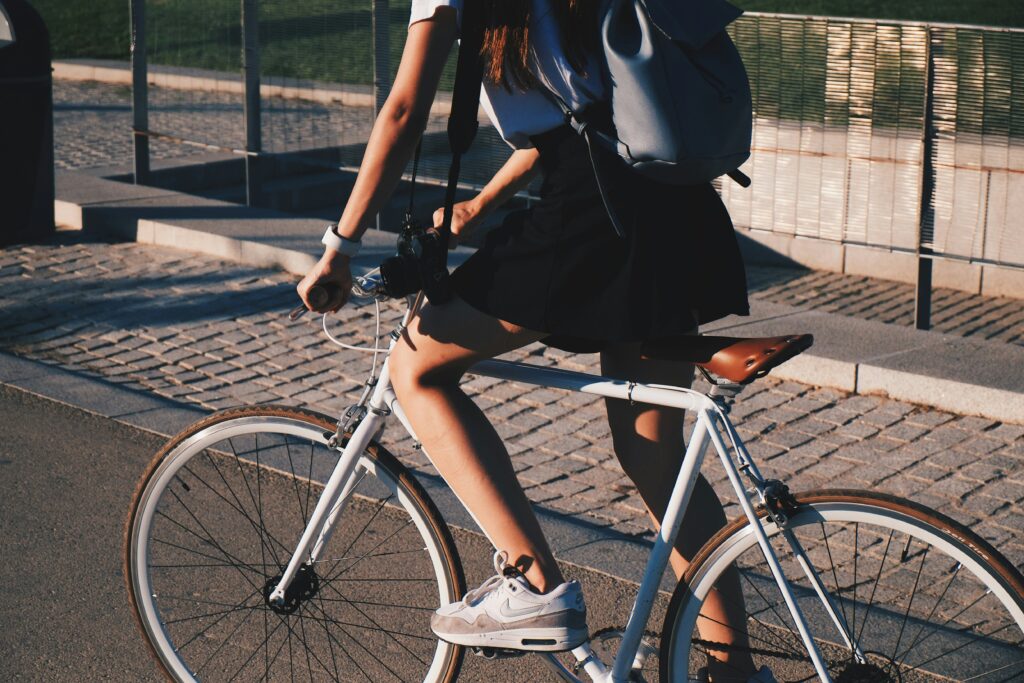
Riding a bike is exciting and eco-friendly. It can also be a great option for distances that are longer and not quite walkable. Bicycling is also a great way to stay active, healthy, and fit. It is a good habit to help your child build, both for the environment and for themselves! E-bikes are another option, and actually produce less carbon emissions than regular bikes (less human energy is required).
Scooters (Manual & Electric)
Scooters are becoming a popular way to get around. Manual scooters don’t use any energy but your legs. They can be a great option for getting around when the distances are shorter. It is also a fun and healthy method of transportation that kids will love (well-maybe some kids, my daughter won’t touch one!).
Electric scooters are another option, and can be great for longer distances. Like e-bikes, electric scooters may produce less carbon emissions than manual scooters because of the human energy required. Electric scooters can also operate on batteries instead of gas, making them less harmful to the environment.
Public Transportation
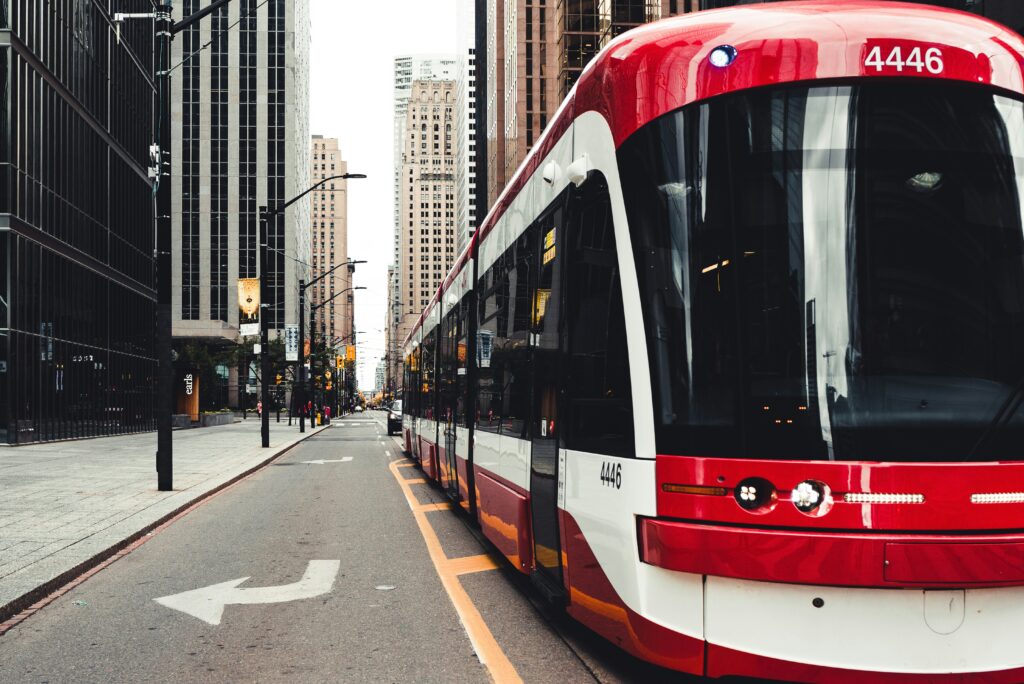
Buses, trains, and subways use less energy per person compared to everyone driving their own car. For kids, riding a train or bus can feel like an adventure! It’s also a fun way to see new routes around town. If you live in or are visiting a larger city where these options are abundant, choosing to use these and teaching your child to use them can go a long way in protecting the environment.
Buses produce about 100g of CO2 per mile, which is much lower than the average car output of 374 per mile. Trains produce about 88 per mile.
Carpooling & Ride-Sharing
Although not the most sustainable method of transportation from our list of options, carpooling and ride-sharing can reduce carbon emissions because it reduces the number of vehicles being driven. When you ride ride share, it reduces the amount of fuel used and reduces the CO2 emissions. If you are traveling somewhere and everyone can fit in one vehicle, do this instead of taking 2 or more cars. The goal is to reduce the number of vehicles on the road.
Electric & Hybrid Vehicles
While kids may not drive yet, they can learn how cars that run on batteries are better for the planet. These cars don’t release smoke into the air like regular ones do, making them cleaner for the environment. While electric and hybrid vehicles are not as environmental friendly as other options like walking or using public transportation, the CO2 production is less than that of a standard car.
A standard car produces approximately 374g per mile, while a hybrid car produces 257 and an electric car only 161. CO2 emissions from electric vehicles are the result of energy production to run the vehicle and batteries, not the use of the vehicle, which does not produce any CO2 emissions.
Below is a chart that outlines each type of transportation and the impact/benefits it has on the environmental, ranked from least harmful to most harmful.
| Rank | Transportation Type | Environmental Impact | Benefits |
| 1 | Walking | No emissions, no pollution | 100% eco-friendly, great for health, free |
| 2 | Biking | Minimal emissions (from human energy), minimal impact | Improves fitness, faster than walking, no fuel needed |
| 3 | Scooters & Skateboards (manual) | Minimal emissions (from human energy), uses human power | Fun, good for short distances, low cost |
| 4 | Electric Scooters & E-Bikes | Minimal emissions (depends on electricity source) | Energy-efficient, reduces car trips |
| 5 | Public Transit (Trains, Subways, Trams) | Low emissions per passenger | Moves many people efficiently, reduces traffic |
| 6 | Public Transit (Buses) | Moderate emissions, better than individual cars | Fewer cars on the road, lower emissions per passenger |
| 7 | Carpooling/Ride-Sharing | Lower emissions per person than driving alone | Saves fuel, reduces traffic |
| 8 | Hybrid Vehicles | Reduced emissions vs. gas cars | Uses both electricity and fuel, more eco-friendly |
| 9 | Electric Cars | Zero tailpipe emissions (depends on electricity source) | Best car option if charged with renewable energy |
| 10 | Regular Gasoline Cars | High emissions, significant pollution | Least eco-friendly, but efficiency can help |
What About Flying?
Air travel is one of the highest CO2 producing form of transportation, making it one of the most environmentally harmful methods of transportation. The best way to prevent this is to avoid using air travel altogether and use alternative forms of travel…
While alternatives, such as the use of trains, is sometimes possible, it is not always possible. So, with that being said I won’t sit here and tell you not to fly. But I will encourage you to take every action that you can to help reduce the harmful impacts that flying has on the environment, including:
- Choosing direct flights when possible to reduce additional fuel usage during landing/take off.
- Flying economy-it is more efficient.
- Choose airlines that have committed to sustainable practices and reducing carbon footprint (Delta, United, Jetblue).
- Consider purchasing carbon offsets-basically like a donation to go towards sustainability efforts to help offset the emissions produced during your travels.
Eco-Friendly Travel on Vacations
You are here because you love travel and love the environment, right? Well, let’s talk about how we can combine the two, allowing us to do what we love most with those we love most, while also protecting the planet that we so desire to see and explore! When traveling, there are many ways that you can implement green transportation into your travels.
- When visiting a city, choose walking, bicycling, scooters, or public transportation over standard vehicle use.
- Choose trains over flights when possible. Trains are better for the environment and produce less CO2 emissions.
- Rent bikes or use electric scooters instead of taxis or Uber/Lyft.
- Use public transportation over renting a car if feasible. If you must rent, choose an electric or hybrid car over a standard car.
- When visiting national parks and similar destinations, use the shuttle to get around or hike/bike through the park instead of driving.
Fun Activities to Teach Kids About Green Transportation
Walking/Bicycling Challenge
A walking or bicycling challenge is a great way to encourage children to not only choose greener transportation, but to also get active and live a healthy lifestyle. You can set it up a couple different ways:
- Create a distance challenge. For example, say that over the next month, you and the family will walk a distance of 10 miles. This can be any distance that you feel your family will realistically be able to reach. Offer a reward to celebrate completion of your challenge.
- Decide on a certain number of times that you want to replace use of a vehicle with walking or biking. For example, in the next month, your family will choose walking over driving 10 times. Choose a realistic goal for your family and work towards it. Doing so will be fun for the family (what kid doesn’t love a good challenge with the promise of a reward?) and you will begin instilling healthy habits into your child.
Transportation Scavenger Hunt
I don’t know about your children, but whenever I introduce a scavenger hunt, my daughter almost instantaneously loves doing whatever activity we are doing. Creating a transportation scavenger hunt for your child may be a great way to get them involved in green transportation and will give you an opportunity to educate them on the different options, in a fun way!
The transportation scavenger hunt may involve looking for the various methods of transportation, including walking, biking, trains, buses, cars, electric vehicles, and so on. Make a list and check them off as you find them. For each one, discuss the benefits and environmental impacts as you go.
Carbon Footprint Challenge
Many times, we are going day to day and not even realizing how our transportation choices are impacting the environment and contributing to our carbon footprint. The same is true when traveling. For one week, track how the family moves around and see how much they can reduce car trips. This can also be done during your next family vacation.
Make a list of the methods of transportation used and for what purpose. Once you have your list, you can go through it and identify times when a more sustainable option could have been chosen, and make a plan for the future.
Map Your Green Route
Put your kids in charge of mapping out your route for the day (with your help of course!). Based on your day to day activities, or itinerary if traveling, let the kids plan a day out using only green transportation methods.Work with them to determine how you can best get from place to place with the least harmful impacts on the environment. Kids loving being involved, and this will give them another opportunity to learn about green transportation and what they can do to help.
Frequently Asked Questions
What is green transportation?
Green transportation refers to travel methods that minimize environmental impact. This includes walking, biking, carpooling, public transit, and using electric or fuel-efficient vehicles.
Why is it important to teach kids about green transportation?
Teaching kids about green transportation encourages eco-friendly habits early. It helps reduce greenhouse gas emissions, improves air quality, and creates awareness about climate change and sustainable living
How can I explain the concept of green transportation to young children?
Use simple examples like walking or riding a bike instead of driving. Talk about how fewer cars on the road can help plants, animals, and humans by keeping the air cleaner. The use of activities and fun challenges can help get them interested and involved.
What are fun activities to teach kids about green transportation?
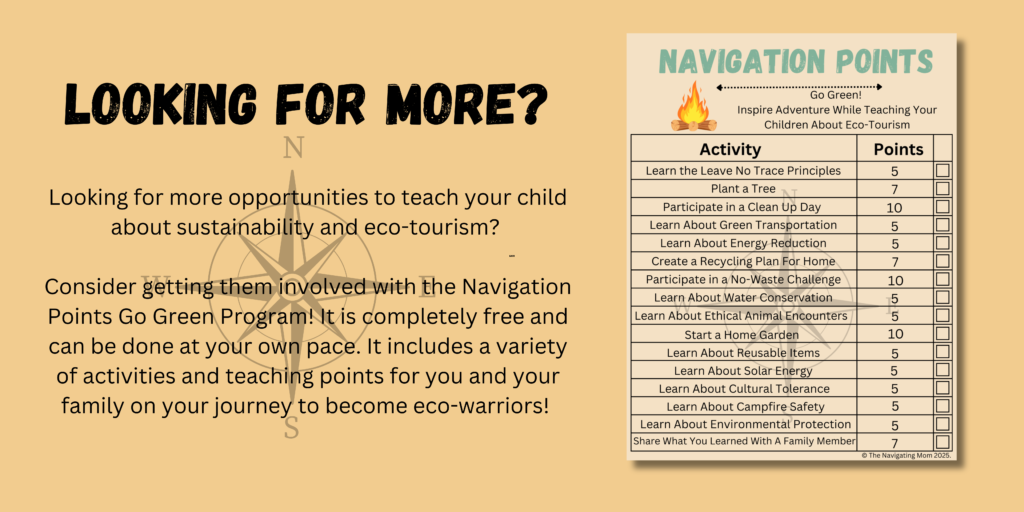
There are plenty of different options for teaching your child about green transportation, including walking/biking challenges, scavenger hunts, map your green route, and our Go Green Navigation Points Program.
What modes of transportation are considered eco-friendly for families?
Walking, biking, carpooling, and public transportation are great options. For longer distances, consider electric or hybrid vehicles.
What resources can parents use to teach kids about sustainable transportation?
Websites like subjecttoclimate.org and earthcubs.com offer free lesson plans, activities, and videos that make learning about green transportation engaging for kids.
Sources
Colorado State University https://source.colostate.edu/sustainable-transportation/
David Suzuki Foundation. https://davidsuzuki.org/living-green/air-travel-climate-change/
